

10 Essential Fall Water Cistern Maintenance Tips
Our guide to fall water cistern maintenance has practical steps for homeowners and jobsite managers to keep the water supply reliable all winter long.
Like Ned Stark’s chilling warning on The Game of Thrones, winter is coming. It was both a warning and a mindset, a reminder to prepare before hard times. That same wisdom applies to water system maintenance (just slightly less dire as compared to battling medieval ice zombies!).

If your cistern and equipment aren’t ready, you could be facing frozen lines, burned-out pumps, or costly emergency repairs. No one wants those headaches in the middle of a deep Alberta freeze.
Your best move is early prep. An hour or two of fall maintenance will save you costly frustrations later. Whether you’ve got an in-ground acreage cistern or managing a jobsite water supply where the tank is above ground, you can’t leave potable drinking water to chance. Use these proactive tips to keep the taps flowing, no matter how low the temperature drops.
10 Essential Cistern Maintenance Tips For Fall

1. Think Thermal Mass
Don’t let your cistern run dry in the winter. A fuller tank has more thermal mass, which slows down ice formation and buys you time if you run into delivery delays.
Special Considerations for Above-Ground and Construction Site Water Tanks
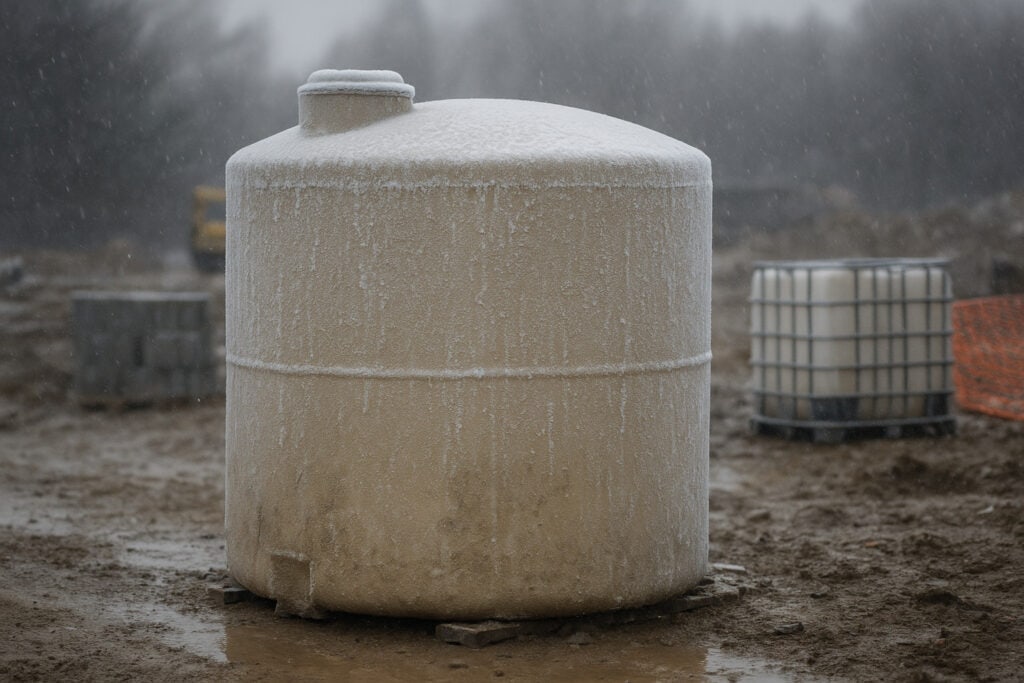
For construction projects, above-ground tanks need extra care before freezing temperatures set in.
- Insulate the tank. Foam panels and wrap can slow down heat loss.
- Use heat tape or heat trace. Apply it to pipes and outlets to keep flow moving during cold nights.
- Check the power systems. Check and test breakers, thermostat settings, and make sure everything powers on as it should.
- Test safety gear. Confirm protection devices trip and reset correctly.
- Add a water level alarm. This gives early warning if levels drop too low from leaks or pump trouble.
- Watch the septic high-level alarm. If it goes off, your pump might not be working right.
Don’t assume it’ll hold up just because it did last year. Above-ground tanks freeze quickly once the deep cold sets in. A bit of prep now can save hours of downtime later.
Need a reliable water hauler to help? Contact us for support or to schedule regular water delivery to your jobsite in Parkland Country or central Alberta.
2. Seal it Tight
Check cistern lid gaskets for cracks or looseness. And while you’re looking, inspect vent screens too. You don’t want rodents, insects or leaves getting in and fouling your clean drinking water. Clear away any buildup now while it’s dry and accessible.
3. Swap in Fresh Filters
Replace water filtration pre-filters inside the house. After a summer of catching sand and debris, sediment buildup will mean it’s ready for a change. A clean sediment filtering unit means better water quality and less strain on your cistern pump.
4. Listen to the Pump or Pressure System
Listen for short-cycling (turning on and off too often). It could be a sign of leaks or clogged filters. A system that runs too often might be working harder than it should. Catching it early prevents bigger problems later. Also, keep an ear on your water softener’s flush cycle. When water treatment devices malfunction, it could run your cistern dry without warning.
5. Keep the Warmth In
If your cistern system is in the basement or utility room, keep that space at or above 12°C. If you’re heading out of town, know your insurance policy. You may need to leave heat on and have someone regularly check on things, or drain the lines. Cold-soak freeze-ups can wreck cistern pumps, blow pipes, and create costly messes.
6. Plan Ahead for Usage
Expecting house guests for Thanksgiving or heading south for a Christmas holiday? Get out the calendar and plan your water deliveries in advance so you’re covered. A reliable potable water supply isn’t something you want to gamble on when company is over and bathrooms are extra busy. And remember that a fuller tank adds thermal mass, so don’t make the mistake of leaving your cistern empty while you’re away.
7. Check Your Insurance Fine Print

Most home insurance in Alberta requires that heat be maintained, and in many cases, that someone checks on the home every 48-72 hours. According to the Insurance Bureau of Canada, damage from frozen pipes may be covered, but not the furnace or boiler repair if it was not properly maintained. Review your policy now, not when you need to file a claim.
8. Fix Drips
That running toilet, leaky faucet, or dripping showerhead might not seem like a big deal, but steady water trickles can freeze in lines or drain a cistern dry before you notice. Fix them in fall, while it’s easy.
9. Winterize Outdoor Taps
Disconnect hoses and make sure exterior hose bibs aren’t dripping. When freezing temperatures hit, even a small amount of trapped water can expand and split pipes.
10. Don’t Forget Hot Tubs and Pools
Planning to use your hot tub through the winter? Keep it topped up. The extra thermal mass helps retain heat and prevents freeze-ups. For swimming pools, follow the manufacturer’s winterizing steps. It may require draining to the recommended level, blowing out lines, and adding antifreeze only where needed. A little prep now protects your investment and ensures everything’s ready to enjoy again in spring.
Stay Ahead of Winter
A bit of fall maintenance and prep can keep your cistern, pumps, and water supply trouble free through the coldest months. The goal is the same whether it’s a home system or a jobsite tank: fewer surprises, fewer headaches.
Look. Fix. And Be Winter-Ready.
Holidays are busy – for you and for us. We only have so many hours in a day, and if you’ve tried booking last-minute, you’ve probably noticed we can’t always get there the very next day anymore.
We want you to have water when you need it without stressing. That’s why we recommend pre-scheduling your water deliveries before the holiday rush. It reserves your spot, keeps your cistern full, and avoids the embarrassment of running out when company’s over.
Don’t be worried that booking early means paying for water before you truly need it. The reality is, running your cistern too low can actually cost you more. Sediment at the bottom can clog your filters, pumps can burn out if they run dry, and emergency fills are harder to arrange (and sometimes pricier) when trucks are fully booked. Keeping your tank topped up protects your equipment, your water quality, and your peace of mind.
To make it even easier, we can keep your credit card details securely on file, or set up a pre-paid balance you can draw down. That way you don’t have the added task of remembering the e-transfer after each fill. That’s one less thing on your winter checklist.
Reach out today for scheduled water delivery in Parkland County so you never run dry.